Tuesday, 24 August 2021

Mandatory Covid-19 Jabs Push, Border Closure Debate and More


On paper Covid-19 vaccines are not mandatory in Australia (except for previously reported aged care and certain quarantine workers). According to the Federal Government ‘vaccination for Covid is voluntary’ [Source]. On the ground the idea of voluntary choice is being challenged. The push is on by some State Governments, employer groups and industries to force compulsory vaccines.

This article outlines examples where Governments and employers are starting to exclude people from employment if they refuse Covid-19 jabs. Similarly some interstate cross-border travel is becoming subject to Covid-19 vaccination status, among other consideration factors.

Here are some highlights of a growing trend enforcing compulsory Covid-19 vaccination in Australia evident in multiple Governments and media sources:

  • NSW Government mandated construction workers take the jab as a requirement to participate in the State construction industry or face termination from employment. Employers in the construction industry are also mandated to exclude people from certain areas with high Covid-19 rates ‘unless they have received a Covid-19 vaccination’. [Source].
  • Currently those excluded includes people from ‘Blacktown, Campbelltown, Canterbury-Bankstown, Cumberland, Fairfield, Georges River, Liverpool and Parramatta.’ [Source]. No jab, no paid construction work.
  • The Queensland Government now compels NSW entrants to take a jab prior to entry into QLD based on higher levels of Covid-19 prevalence in NSW, and perhaps unhelped by NSW lax Covid-19 suppression approach.
  • The Tasmania State Government recently proposed that tourists entering and exiting Tassie should be jabbed

Some industry groups are starting to compel their workers to take Covid-19 jabs. These include:

  • Qantas – has mandated its employees to take the Covid-19 jab. A Statement issued by Qantas says all cabin crew, pilots and airport workers must be jabbed by 15 November 2021. And all non-frontline workers must be jabbed by 31 March 2022 in order to keep their jobs. [Source ]According to Forbes Magazine, Qantas move is not isolated, as other US companies and carriers such as United, Frontier, and Hawaiian Airlines are implementing similar immunization policies
  • SPC A fruit and vegetable manufacturing conglomerate has mandated all frontline staff to get the jab by November or face exclusion from SPC employment. [Source]
  • Tourism Peak bodies – this week tourism bodies in WA and Tasmania have called for compulsory vaccinations

Under Australia’s existing State laws, where a State Public Health Orders exist, this may provide some legal protection when a business or Government authority makes a move to compel staff to get a jab. This is by no means the only consideration as a person’s right to choose what goes in their body is not something that can be simply extinguished by a political & bureaucratic pronouncement. It is complex. This raises many questions such as:

  • How do Government Authorities make and use Public Health Orders?
  • What happens if a State Government takes a lax approach in preventing Covid-19 spread and instead over relies on Public Health Orders to enforce vaccinations?
  • What are consequences of ignoring prevention in the first instance as seen in the recent NSW spread? NSW ‘gentler’ lax suppression approach failed to contain an outbreak that started with one Limousine Driver. Instead of moving fast to contain the spread, NSW authorities took the view that the virus can just ‘dribble’ for a quite bit. This concern has been covered at NSW Press Conferences, just Google.
  • Why are swift, short and effective lockdown lessons from WA, SA, NT or QLD carrying no weight with NSW and Federal authorities?
  • It will be morally wrong for WA or NT or SA to agree to NSW push that they should open up borders at present time and start leaving with COVID. It is not morally right to be lax as a policy setting just for the sake of nudging or compelling people into being jabbed. Let them choose.
  • Who can be mandated also seems to be a function of power. Trades people from Sydney Western Suburbs are being compelled to take a jab to keep their jobs but doctors in major hospitals and General Practice are not mandated despite that they deal with vulnerable people every day. I am not suggesting doctors be forced to take a jab at all. I am observing the power dynamics in terms of who is compelled and who is left to make a voluntary choice.
  • Pressure exerted on WA by NSW, the Feds and dominant Media leaves a lot to be desired! If you are WA why put at risk the mining sector and the benefits it brings to the broader WA economy? Perth will be so much worse off if COVID is allowed to affect the mining sector here as it did in South America ala Brazil. Mining has many multiplier effects to many other sectors and industries in WA from my everyday observations and my rudimentary economics.
  • At this point, WA is living a normal life so why adopt NSW COVID policies and end up with devastated childcare arrangements/industry, devastated education arrangements across all years, needless to mention the chaotic implications for matriculation into post-secondary education such as TAFE/ University we see in NSW & VIC?
  • Why WA would exchange current freedoms with immense psychological pressure experienced by our compatriots in Sydney and Melbourne no end? So while some don’t see any sense in WA tough stance on boarders, many WA residents are horrified whenever they hear attacks directed at WA State.
  • What is seen by some over East as WA parochialism, for many of us in WA we see as logical economic and social imperatives for WA. It’s not that we are not aware that open borders could be a good thing for Australia, but the terms and timing are not things that can be ignored as that can severely impact economic and social foundations in WA. Australia National Cabinet will do us a favour if it factors in valid WA concerns
  • Finally, we know even countries that are far ahead in vaccination rates are finding vaccines are not a silver bullet (they talking 3rd booster shots). Good policy should not ignore that fact. We should look more broadly how to prevent and manage Covid-19 and support population groups across Australia. Surely we need a broader public health policy that looks so much more broadly than a single answer in vaccination.


References:

AAP. Construction workers from COVID-hit areas of Sydney must be vaccinated to return to site. Reporter: Hannah Ryan. 08/08/2021. https://7news.com.au/lifestyle/health-wellbeing/vax-shot-a-must-as-sydney-builders-return-c-3624176

ABC. Shock over Queensland's one-jab rule for workers crossing border while vaccine supply uneven. https://www.abc.net.au/news/2021-08-17/covid-19-confusion-workers-border-crossings/100382742

Government of Western Australia. NSW to transition to new ‘extreme risk’ category to keep WA safe. Friday, 20 August 2021. https://www.mediastatements.wa.gov.au/Pages/McGowan/2021/08/NSW-to-transition-to-new-extreme-risk-category-to-keep-WA-safe.aspx


Government of Western Australia. Amendments to WA’s controlled border with NSW, ACT and SA.13/08/2021 11:50 AM https://www.mediastatements.wa.gov.au/Pages/McGowan/2021/08/Amendments-to-WAs-controlled-border-with-NSW-ACT-and-SA.aspx

NSW Government.  Construction rules and restriction. 22 August 2021. https://www.nsw.gov.au/covid-19/health-and-wellbeing/covid-19-vaccination-nsw/covid-19-vaccination-for-workers


SMH. SPC first Australian company to require its staff to be vaccinated. Reporter: David Estcourt & Dominic Powell. 5 August 2021. https://www.smh.com.au/business/companies/spc-to-require-onsite-staff-and-visitors-to-be-vaccinated-20210805-p58g08.html]


Qantas Airlines. QANTAS GROUP TO REQUIRE EMPLOYEES TO BE VACCINATED AGAINST COVID-19. 18 AUGUST 2021. https://www.qantasnewsroom.com.au/media-releases/qantas-group-to-require-employees-to-be-vaccinated-against-covid-19/

The Australian. ‘Given up’: Palaszczuk’s dig at Gladys. https://www.theaustralian.com.au/subscribe/news/1/?sourceCode=TAWEB_WRE170_a&dest=https%3A%2F%2Fwww.theaustralian.com.au%2Fnews%2Flatest-news%2Fwe-havent-given-up-queensland-premier-palaszczuks-swipe-at-nsws-handling-of-delta-outbreak%2Fnews-story%2F55703a08fea2d07b1c26672841d17b4c&memtype=anonymous&mode=premium


Tuesday, 15 June 2021

AMIDST CORONA VACCINE HESITANCY, A PUSH FOR COMPULSORY JABS


We are in a new territory amidst anxiety and pressure to take the Covid-19 vaccine jabs. The media and some stronger public advocates for Covid-19 vaccines had for a long time discouraged and tended to dismiss voices preoccupied with complex and nuanced questions about safety.

Touching on complexity and nuances for a while has been judged as either you’re with us or you are against us. Many such Covid-19 vaccine proponents said it is just so simple. They don’t see what the fuss is all about. If only science was always that straightforward.

It was after global reports from Europe and beyond about blood clot occurrence that opened up a Pandora’s Box about risks. It made it possible for some to mention safety concerns to a point. Before that a public mention about safety concern tended to be dismissed outright as not deserving a hearing, and largely reduced to conspiracy theories.

Reports about blood clots saw hesitancy level going from 13% to about 30%.

Interestingly, lately increased numbers of international doctors and medical scientists have circulated descriptive and analytical material describing safety and ethical concerns connected to Covid-19 vaccines and certain tests. Some of these contrasts sharply from media vaccine advocacy that chose to engage less with complexity and nuance.

But as levels of hesitancy became more visible, even the media started admitting that the issue is not simply vaccine supply, but also increased hesitancy in getting Covid-19 jab. I remember once reading a media report which had noticed only one person had turned up at a Covid-19 vaccination centre.

Mind you, the hesitant folk include some well-educated healthcare workers and aides who chose not rush for the jab or not take it at all. According to literature and media reports this is the case in a number of countries such as Australia, the US and Singapore.

What also makes this new territory is the unprecedented level of pressure from the media to stigmatise people that they must be anti-vaccination across the board, even when it’s clear many people take various vaccines, but do not wish to be rushed into Covid-19 jab without exercising informed choice and autonomy in decision-making.

If a significant minority of medical doctors and clinical nurses or paramedics are not rushing for a Covid-19 jab, it is a puzzle when the media and some politicians feel more qualified to want to compel even reluctant clinicians from taking the jab ASAP.

There are also ethical considerations to these treatments that are at odds with a compulsory approach. 

Clearly the Australian federal Opposition, media and some State Governments recently seemed to succeed in exerting pressure on the Federal Government to accelerate the pace of vaccination and engage in strategies that indirectly compel people to take the jab. This is despite the Federal Government’s medical expert panel advising against a compulsory approach.

By this June 4, 2021 the Australian National Cabinet Meeting was reportedly now inclined to consider a shift towards mandatory vaccination for aged care workers and disability workers.

Mandatory Vaccinations of Aged Care and Disability Workers

National Cabinet reaffirmed the importance of Aged Care and Disability workers being vaccinated as soon as possible.

National Cabinet indicated an in-principle disposition to mandating aged care and disability workforce COVID vaccinations, and has tasked AHPPC to provide advice on this matter as soon as possible.

National Cabinet noted that influenza vaccinations are able to be mandated under state public health orders and other similar state and territory legislative arrangements, based on health advice.

Source: National Cabinet Statement 04/06/2021. https://www.pm.gov.au/media/national-cabinet-statement-040621

At the same time isolated media reports were indicating that in Western Australia some hotel security guards chose to quit jobs rather than accept a Western Australia State Government rule forcing them to take Covid-19 vaccines.

The last decade saw a limited strategic aged care workforce development in Australia, if any. If not for migrant labour force, it is hard to see how Australian aged care providers will manage. We saw workforce constraints at the peak of the pandemic in Eastern States. Workforce constraints are also indicated with community homecare packages where client waiting lists persist.

And while some of the hesitant working folk may take the jab if mandated, it is unlikely all of them will do so. We can expect mixed outcomes as the security guards who chose to leave the industry. understandably some in the aged care could face a similar choice.

Also work managers are increasingly being expected to nudge along their stuff to go and get a jab. And presumably some organisations are expected to make business arrangements that ensure jabs can be taken at the workplace such as aged care or disability services. Pressure is on!

The strategy of using workplace managers to prod staff into jabs is problematic. It seems not to sit well with the idea of informed consent. Using managers as influencers is also an indirect way of linking job opportunities and rewards with willingness to get a jab.

So while some could take the jab for fear of not wanting to lose a job, the ethics of nudging people along in this way leaves something to be desired. Managers are not medical doctors.

Some suggested using employment law at an organisational level to get people to take a jab.  Similarly, we have also now long heard the idea of no jab no overseas travel being worked through by Airlines, the World Health Organisation and other some tourism stakeholders

The nature of social relations also come to the fore – take an example where by implication some folk feel they should impose on hospital clinicians, paramedics, aged care, disability workers, and some hesitant migrants to take a jab.

Some it appears wish to have more of say into choices made by some of those residents living in aged care and disability facilities to take a jab. They take great exception that in some instances these aged care and disability residents and their families have not yet gone for the jab. Switch on the Tele, the pressure from the media and influencers indicate that the Fed Government should get this job done. But is it clear cut that Government should compel the hesitant vulnerable groups indirectly or directly? 

As we can see, in this new territory some of the core liberal democracy values about liberty, ethics, informed consent, choice and autonomy, safety, and such become implicated – treatments and vaccinations don’t occur in a vacuum. So it would appear times before us we will see interplays and contestation about whether Governments and business can directly and indirectly compel people to take vaccines.

It looks like emerging spaces for vaccine take-up contestation may include the employment realm, airline travel, access to certain public spaces, etc. To this interplay add the debates about to what extent the jabs will prevent Covid-19 infection? Further, are questions concerning absence of longitudinal Covid-19 vaccine studies which cannot be known for some years yet. The specificity of Covid-19 vaccines is also likely to be further examined as we are told this is a new generation of vaccines underpinned by new technological innovations.

Links:

More than 1.5m Covid vaccines sitting unused in clinics across Australia, Wed 19 May 2021. Sarah Martin. https://www.theguardian.com/australia-news/2021/may/19/more-than-15m-covid-vaccines-sitting-unused-in-clinics-across-australia

AFP, Four reasons for COVID-19 vaccine hesitancy among health care workers, and ways to counter them, Tuesday Apr 27, 2021 https://www.aafp.org/journals/fpm/blogs/inpractice/entry/countering_vaccine_hesitancy.html

It’s crucial COVID vaccine hesitancy among health workers is addressed. 19/01/2021. https://www1.racgp.org.au/newsgp/clinical/it-s-crucial-covid-vaccine-hesitancy-among-health

Perth's hotel quarantine system could see fewer security guards due to shortage of vaccinated workers06/05/2021. https://www.abc.net.au/news/2021-05-06/concerns-hotel-quarantine-security-shortage-vaccinated-workers/100119274


Tuesday, 9 March 2021

Increase Social Housing and Review Australia Competitive Neutrality Strategy


Australian Governments of all political persuasion need to improve policy responses to the issue of homelessness. After all public housing stock did not diminish by accident.


The reduction of social housing was deliberate decision by orthodox economic policy minds who took the view that private rental offered a better solution for most people. Two decades and half down the track it is evident it has not worked for certain sections.


But it is not a secret that some people with complex needs struggle to access or maintain private rental. There are complex factors at play including psychosocial challenges and long-time unemployment. These barriers may also limit the rate of access to generous Government homeownership schemes.

                                   Bentley 360 public housing development - Source: WA Government Housing

Higher rates of Aboriginal people, women running away from domestic violence, and women over 50 form a big part of Australia’s homeless, to name some.


A bit of understanding of policies that encouraged reduction in social housing can help us in re-thinking policy decisions and strategies in dealing with where we find ourselves today.


The mid-1990s saw Labor and Liberal States and Federal Governments move towards implementation of the National Competition Policy and neo-liberal strategies. The public housing stock came under scrutiny as neo-liberal thinkers set out to instil market discipline in the public sector.


State Governments moved towards commercialisation and corporatisation – that means acting more like businesses. They applied new notions of Competitive Neutrality – apparently to ensure Government housing provision did not get in the way of private businesses.


In practice this meant States privatising significant housing stock and proportionately reduced development of new housing stock.


What for? Well, using neo-liberal filters they held the view that their approach ensured more efficiency so that private rental could compete freely and not be ‘crowded-out’. And certainly it seemed an attractive proposition for Governments committed to reducing expenditure.


This also meant Federal Government policy calculations preferred to see use of rental vouchers (rental assistance through Centrelink) instead of increase in public housing investment.


All States and the Feds are signatory to State-Fed Agreements that require them to stick to Competitive Neutrality. Federal-State funding arrangements also embed how such things are to be done.


As such, in my view it is not easy for individual State Governments to change the system because they are all tied to notions of corporatisation and commercialisation. Adherence to these arrangements is regarded as part of good governance.


Mind you there are also enough indications that sometimes competition policy strategies get implemented in spheres of human services contrary to the initial intention of the reform.


There isn’t a lot in Australia’s National Competition Policy texts to support the idea that people with complex psychosocial needs were ever going to be adequately supported in the private housing rental market.


Until current policy makers and advocates start scrutinising workings of Competitive Neutrality and commercialisation practices for at-risk groups in the housing sphere, any solution will be at best patchy.


That all said I am also a great supporter of homeownership policies implemented by the Feds and States in recent times and way back. After all without existing homeownership schemes the ranks of the homeless will be worse. But this success should not take away our collective responsibility to voice our support for people with complex needs that are homeless or at-risk of homelessness. To this end, the National Cabinet (Former COAG) needs to look again at impacts of Competitive Neutrality for at-risk groups.

Sunday, 3 January 2021

African-Australian Youth Soccer Match at Festive Season Perth


As 2020 came to a close the Boxing Day saw wide ranging African-Australian youth soccer teams enjoy battling it out at a soccer competition at Koondoola community grounds, in Perth Northern Suburbs.

The game saw youth from a range of countries’ of origin - Ethiopia, Zimbabwe, Uganda, Congo, Liberia and Tanzania. It was all in colours with styles and skills on display.

Rashid Mustafa, a Volunteer Tanzanian youth couch explains about the ins and outs of the game as he takes a minute to explain to the writer about these soccer events

According to info released by organisers, the occasion is “about outdoor and indoor activities…to encourage young [people] with different talents within the communities”. It also provided a fun outlet for family and friends over the festive season.

It’s great to see growing African-Australian communities making the most of community sports participation. Besides, what life will be without youth soccer? You want your young ones to horn their soccer formation skills or passes? Keep an eye these sports occasions.

This AJL Entertainment Super Cup Tournament was supported by the Perth African Nation Sports Association.

Also see a link for the Perth African Football Council Facebook page: https://www.facebook.com/pansa.org/


Friday, 1 January 2021

AFRICAN CUISINES PERTH CATERING INFO


AFTER RECENT CHATS ABOUT THINGS CULINARY, DELIGHTED TO UPDATE FOLKS AVAILABILITIES OF EAST AFRICAN SWAHILI CATERING SUPPLIES.

MISSING ANY SWAHILI CUISINES? PLANNING AN EVENT AND YOU'RE KEEN FOR AFRICAN EATS? CATCHING UP WITH FRIENDS FOR COCKTAILS AND WOULD LIKE SOME AFRICAN BITES? DONT WORRY, CONTACT US.

Catering Orders Contact: pendobtm@gmail.com


MENU

We cater for growing tastes of African Cuisines in West Australia specialising in East African Eats. Orders for your special group event be it Mains or Cocktail Bites?


MAINS 
  • PILAU served with Kachumbari
  • COCONUT RICE
  • CHAPATI 
  • NDIZI (Green Bananas/Plantain) cooked in meat or chicken sauce 
  • Legume dish of choice (Chick Peas or Choroko or Lentil) 
  • MEAT or CHICKEN Mchuzi/sauce 

VEGITABLE DISHES
  • MCHICHA (TANZANIAN SPINACH) with Coconut Sauce (or wa mafuta) CABBAGE Sate 
  • KISAMVU WITH Coconut Sauce 
  • KACHUMBARI 
  • SEASONAL GREEN VEGIES 

BITES 
  • SAMBUSA (Swahili Samosas)
  • MAANDAZI & VITUMBUA (Sweet Rice Buns) 
  • CHAPATI BAGIA
  • Fried fresh cassava (mhogo) - with kachumbari optional
  • Fried banana/plantain
  • Kachori

 ** Western bites such as Mini Quiches can also be supplied


Monday, 30 November 2020

Invited to Taste Kilimanjaro African Perth EATS @ Community Mirrabooka Markets

Join a Taste of Kilimanjaro-African EATS @ Community Mirrabooka Markets. As year 2020 comes to a close, welcome to sample international food including our Kilimanjaro African Food, featured by a Tanzanian women group of Perth, WA. Occasion: The initiative is part of the Community Mirrabooka Markets featuring International Food; Multicultural Arts & Crafts; Local Services; Family Fun & Entertainment in a COVID-safe set up. (Pilau photo image Courtesy: Swahili recipies1.blogspot.com)
Great Tanzanian culinary EATS on serve not to be missed – the famous Swahili Pilau with Kachumbari, mouth-watering sambusa bites, the delectable Vitumbua (Tanzanian Sweet Rice Buns) and much more. Delectable vitumbua (rice buns) (Courtesy: Image: gramho.com)
When: 17th December 2020 Time: 4pm – 9pm Where: The Square Mirrabooka, Yirrigan Drive Carpark Contact: kilimanjaro.africanfood@gmail.com ; pendobtm@gmail.com Future Catering Orders: The Kilimanjaro African Food takes catering orders for private and business functions via kilimanjaro.africanfood@gmail.com

Tuesday, 13 October 2020

Victoria Hotel Quarantine Governance & Compliance Concerns

Intro

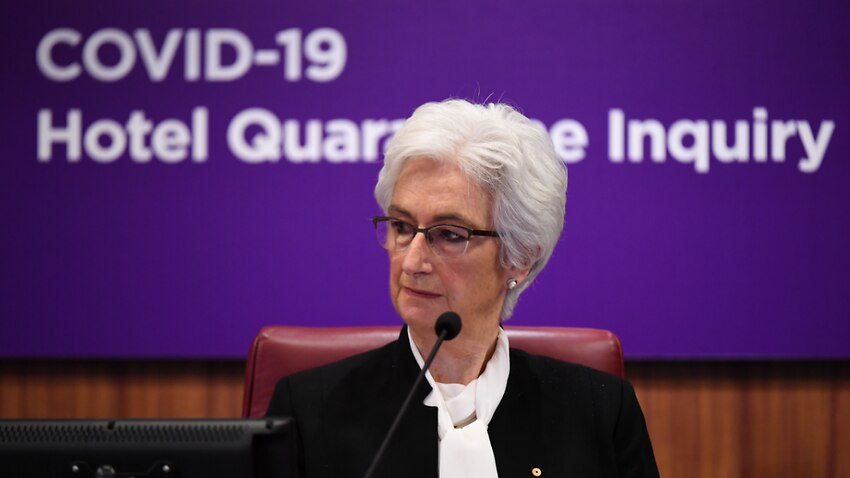
The Victoria Hotel Quarantine saga has raised eyebrows amidst unfolding Board of Inquiry revelations [Inquiry Link]. I browsed through some of the transcripts and picked up a couple of concerning themes. Here is my take so far:

  • Funding, governance, and compliance structures were assembled without adequate regard to the function of Government entities and delegates vested with Public Health and Wellbeing Act powers and carriage of the Commonwealth Biosecurity Act 2015 provisions.
  • The DHSS agency lead role was sidelined without clear appreciation of potential ramifications for infection disease control
  • Procurement structures and performance reporting lines relating to Covid-19 infection control are not connected
  • The notion of shared accountability and blurred roles feature strongly

List of evidence transcripts from the Inquiry drawn upon for this article can be located at the end of this piece.                          

Courtesy: AAP cited on SBS

Governance structures excluded key public health officials

  • The Chief Health Officer and public health experts were largely not included in critical high State strategic planning such as Operation Soteria.
  • Public health and communicable disease expert staff excluded from designing of Operation Soteria. They had no ‘involvement of Public Health Command in Operation Soteria’, noted one senior health bureaucrat. ‘The Operation Soteria meetings I attended did not involve the [Public Health Command] initially, and did seem to me to focus heavily on logistics considerations.’
  • Failure to adequately include key health officials in high level decision-making mechanisms led to ‘lack of a unified plan for [Operation Soteria]’ and deprived opportunity for the Health Department to bring to bear a lead expertise role in underpinning ‘policy and set of processes to manage the healthcare and welfare of detainees’.
  • The frustration experienced by the somewhat sidelined health leads is illustrated in the evidence before the Board of Inquiry. They asked those controlling pandemic State structures above them in these terms: “The Chief Health Officer and Deputy Chief Health Officer require a single plan to be produced for review by 10am tomorrow morning Friday 10 April. This plan must include....we have some dot points….The plan will need to show all processes and policy decisions, and manage health and safety of detainees.”
  • A minor concession was made to their demand, they were allowed a “Public Health Command liaison” – a liaison status in their view “is not the same as having direct oversight and direct view of the daily challenges and operational complexities of that program… the public health view and the public health expertise with respect to that would have been beneficial to be more directly engaged”.
  • As the Chief Health Officer had no operational line management responsibility over Operational Soteria, he says he only became aware of deficiencies in infection control after an outbreak.

So in looking for what went wrong in Victoria leading to hundreds of deaths, economic and social disruption, we also need to be asking what exactly the Victoria Government intended to be achieved by excluding these health officials from these critical planning structures??

It is also fair to ask that Victoria Health Department teams are actually the very personnel with delegated authority to help secure community safety through powers vested through the State Public Health and Wellbeing Act and also the Commonwealth Biosecurity Act 2015.

When the very senior bureaucrats and politicians in the State overlook or circumvent the roles vested with professional experts and street-level-bureaucracy, how are these officers going to effectively carry their statutory role when not sufficiently involved in designing critical operational underpinnings?

Evidence at Board of Inquiry cites the Crisis Council of Cabinet as a decision-making entity that formulates Victoria’s Covid-19 pandemic policy response, including resource allocation. So what exactly did this Crisis Council of Cabinet authorise in relation to Operation Soteria funding?

The Victoria Expenditure Review Committee allocated $80m to the Department of Jobs to manage the Hotel Quarantine among other things. Who sits in this entity and how does it all fit in in terms of past and future funding allocation decisions they make?


Shared Accountability and Blurred Statutory Compliance

A constant claim made in some of the evidence before the Board of Inquiry that the decisions made are justified under the notion of “shared accountability’’. There are benefits working across-government, but there are fundamental questions raised in the Victoria Quarantine Hotel saga:

  • Why ignore compliance accountability under the State Public Health and Wellbeing Act when setting up structures of shared responsibility? Surely top of your mind when you are bringing together interagency parties involves including relevant health delegates already mandated in their departmental roles to fulfil responsibilities connected to their statutory role?  You will have others drawn in for sure from across governments as appropriate.
  • The Victoria Government did not designate the Chief Health Officer as State Controller – thus failing to comply with its own legislative Act in managing a pandemic. Is this not odd when dealing with a pandemic, and when the legislation requires this official to act as the State Controller?
  • In giving evidence, Minister Mikakos seemed unperturbed that the State Chief Health Officer was sidelined from occupying the role of a State Controller during a pandemic and says “it was not an issue of concern…not live issue”. What are the implications for statutory compliance in public administration? Why support the blurring of roles at such a critical time? On the other hand, are there other reasons the Minister was aware of that we in the public are not privy to?
  • Confusion persist about the role of DHHS as lead coordinating agency from role of the State Control Centre as a coordinating mechanism and decision-making agency
  • DHSS Departmental Secretary Ms Peake has a different understanding of what is meant by DHSS being a lead agency. She says DHSS had a role only to a point. She says pandemic issues go beyond Victoria jurisdiction. Oddly though, she does not unpack the statutory responsibilities expected of her Department under Victoria Public Health and Wellbeing Act powers or the powers vested with her Department under the Commonwealth Biosecurity Act 2015.
  • The Minister of Health says she had not been briefed or read Operational Plan Soteria till Rydges and Stamford Hotel outbreaks – but it was a big pandemic response thing happening.
  • Minister says was not involved in development, consultation or authorisation of the quarantine model. And says “it was a multiagency response involving many Departments and agencies, and I would have expected them to work together on these issues.’
  • Clearly evidence show the Department of Health was not driving Operation Soteria, yet the Plan says the Department of Health is the control agency and ‘’responsible for oversight and coordination’’.
  • Is there also a confusion and blurring of roles between what the Minister of Health is expected to lead and what the Emergency Management Commissioner is meant to do in times of pandemic??
  • It turns out the need to outline clear pandemic response structures and leadership was identified as far back as 2011 but the State of Victoria has not addressed this issue. Is it going to be addressed this time?
  • Lack of clarification for these basic definitional issues has ramifications for future agency role clarity, transparency, collaboration and accountability.
  • Evidence given at the Board of Inquiry cites the Crisis Council of Cabinet as a decision-making entity that formulates Victoria’s Covid-19 pandemic policy response, including resource allocation. So what exactly did this Crisis Council of Cabinet authorise in relation to Operation Soteria funding? Who is part of this Council?
  • The Victoria Expenditure Review Committee allocated $80m to the Department of Jobs to manage the Hotel Quarantine among other things. Who sits in this entity?
  • Emergency Management Act – is there potential for some politician in the future to do away with other important legislative and operational compliance requirements in the name of the Emergency Management Act? How are they to be kept accountable? How will the public be able to follow lines of accountability? As we have seen in the Victoria saga, no single top bureaucrat or politician owns up to the hotel quarantine saga!


Procurement Structures Unconnected to Performance Reporting Lines

The Victoria purchasing and performance reporting structures for the Hotel Quarantine Program oddly neglected the lead and oversight statutory role expected of a Health Department.

  • Procurement governance set up did not allow the Department of Health from effectively undertaking performance administration and monitoring activities in a manner you would expect under any Government Purchasing and Contracting Policies and Guidelines.
  • As DHHS lead role was sidelined or ignored, in effect, procurement arrangements did not sufficiently embed operational supply, capabilities and performance arrangements aligned with expectations under the Public Health and Wellbeing Act powers and provisions under the Commonwealth Biosecurity Act 2015.
  • It seems the Victoria Department of Jobs, Precincts and Regions who managed the hotel tender funds did the best they could leading in procuring hotels, drawing up supply contract specifications and administration, including of security guards as assigned. But authorities higher up above the Department did not take into account that to manage contracts effectively should have allowed DHSS a lead role at least in procurement, administration, performance monitoring and support of contracted suppliers in connection to training, PPE, and cleaning.
  • As already noted there was role confusion and blurring of roles. In the context of procurement and monitoring performance a response from Department of Jobs illuminates this point: “Well, certainly from a DJPR perspective we were certainly responsible for the operational elements of, you know, functions that were relating to DJPR. But to the best of my knowledge, our Department did not have any involvement on health-related matters.”
  • The issue here is structural. If decision-makers further higher up place procurement responsibility with one agency and then expect another agency to be responsible for performance without clear management lines of responsibility, this is odd and really puts operational workers in difficult situation.
  • In my view, there is nothing wrong for procurement method to embed job-creation as secondary objective. But the highest levels of bureaucracy and political leadership needed to ensure intergovernmental structures and processes did not sideline primary compliance objectives under the Public Health and Wellbeing Act powers & the Commonwealth Biosecurity Act 2015.

Government Transferred Risk to Contracted Parties

The Victoria Government transferred risk to its suppliers without adequate attention to third party capacity or support measures. This is indicated in insufficient arrangements for training, PPE and cleaning necessary to minimise the spread of coronavirus by the returning travellers and workers at hotel sites to the rest of the community.                               

Courtesy: AAP as cited on ABC

A seemingly well-meaning purchasing officer from DJPR explained that:

“To my knowledge, the cleaning, you know, was --- there was a contractual obligation on the part of the supplier to ensure that they met whatever the nationally accepted standards were for COVID-19. So, from my perspective, it was not something that I was administering actively in that sense. We were in contact with hotels on a regular basis to discover whether there were any issues that were of concern. But I think I had referred earlier on that a lot of the day-to-day issues were actually managed on the ground between the on-site management teams from both DHHS and DJPR and the hotels.”

Perhaps the transfer of disease infection control risk to the contracted third parties was not intentional – at least to the extent that we can’t expect Department of Jobs bureaucrats to be thoroughly versed with infection control – why would they? But we would expect Ministers and senior bureaucrats higher up in Government to be thoughtful about which Government entities are vested with funding, contracting and performance monitoring of matters involving infectious or communicable diseases.

I suspect there are stacks of Government Purchasing Policies and Guidelines they could have used to refine their purchasing processes. This is whether they wanted to use a preferred panel contracting arrangements or any framework allowable under their Purchasing Policy. And also whether they included job-creation as a secondary objective or not. They still needed to be transparent in their processes and follow due diligence at least with well-planned support measures for contracted third parties.

We can’t assume at this point that a lesson is learnt about went wrong at the level of purchasing. For those familiar with contracting and tendering policies, you will certainly be interested in looking at the evidence given by various parties about how the funding was allocated to DJPR in the first place.

I was a bit troubled that the then Minister of Health and her Health Departmental Secretary appear not to reflect on the risks either given that the funds to manage infection control at hotel sites were not allocated directly to their Department. We also now know the Minister of Health had no say in the matter and says she didn’t even know about Operation Soteria before interagency stakeholders designed it!  

And where does the Victoria Crisis Cabinet Council and also the Expenditure Review Committee sit in all this in respect of decisions they made about funding allocation?

This story is still unfolding, so conclusive remarks will be premature. But what has emerged from this inquiry so far presents a lot of food for thought. 


As it unfolds……

Lately we saw resignations of the Head of Department of Premier & Cabinet and also the DHSS Minister. There are still issues of accountability and transparency to be unpacked. As the story unfolds, and with hundreds of lives lost in Victoria, it is a puzzle as to:

  • Why the Chief Health Officer was not designated as State Controller as per legislative requirement in managing a pandemic
  • Why key health officials were excluded from critical planning structures?
  • Why did the Victoria Government use procurement structures that were not directly linked to performance reporting lines?
  • Does the Victoria Government acknowledge that it transferred risk to contracted private security agencies instead of allowing DHSS to take a lead role in setting up and managing infection controls at hotel sites? Regardless whether private security agencies were involved or not, DHSS should have led with direct performance reporting lines.

The notion of shared responsibility may come under scrutiny, especially where it can be consciously or unconsciously used to blur statutory compliance, in the process disrupting transparency and accountability.


References

Victoria Covid-19 Hotel Quarantine Inquiry

https://www.quarantineinquiry.vic.gov.au/hearings-transcripts

Transcript of Day 10 Hearing 31 August 2020 (Menon)

Transcript of Day 18 Hearing 16 September 2020 (Sutton)

Transcript of Day 22 Hearing 22 September 2020 (Phemister, Peake)

Transcript of Day 23 Hearing 23 September 2020 (Peake)

Transcript of Day 24 Hearing 24 September 2020 (Mikakos)

Transcript of Day 25 Hearing 25 September 2020 (Andrews)


Tuesday, 15 September 2020

Israel Normalise Relations with Key Neighbours, Remaking the Middle East – Stop Press!

What a year we have in 2020 – wow, so many unexpected things are happening at an unbelievable speed! Who would have predicted this year we would see Israel normalise relations with the United Arab Emirates and also the country of Bahrain!

Caption: Israel Flag, Courtesy: countryflags.com


Caption: UAE Flag, Courtesy: countryflags.com


In an era where so many other world events are unfolding with such acceleration, this Middle Eastern turn is certainly worth a note.  

Caption: Bahrain Flag, Courtesy: countryflags.com


Official sources stated Israel and the UAE will now ‘exchange embassies and ambassadors, and begin cooperation across the board and on a broad range of areas, including tourism, education, healthcare, trade, and security.’ See source  Whitehouse Statements  

As commonly known, Israel normalised relation with Egypt way back in 1978 under the Camp David Accords. It also improved its relations with Jordan two decades and a half ago.

Whatever the driving factors for this latest shift, you got to say this is an epic story unfolding in our lifetime. And who knows where it might lead!  In the meantime, my mind recalls we are asked to ‘pray for the peace of Jerusalem’ (so speak shalom/ salaam).